First in.
Last out.
The direct disaster cleanup network. One board where the primes who run storm work find clean-up and disaster relief crews — and crews stop hunting for the work.
Join the poolThe network is forming now. The crews who get in first are the founding bench.
One board. Everybody on it.
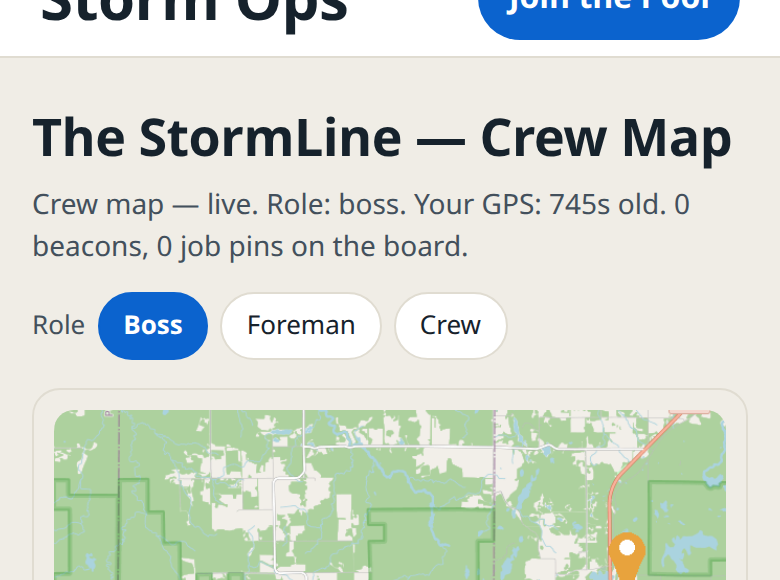
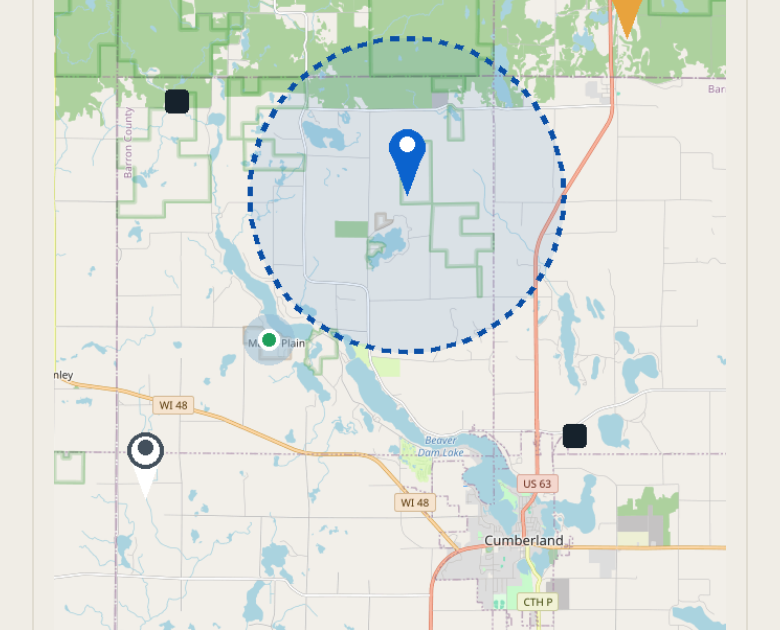
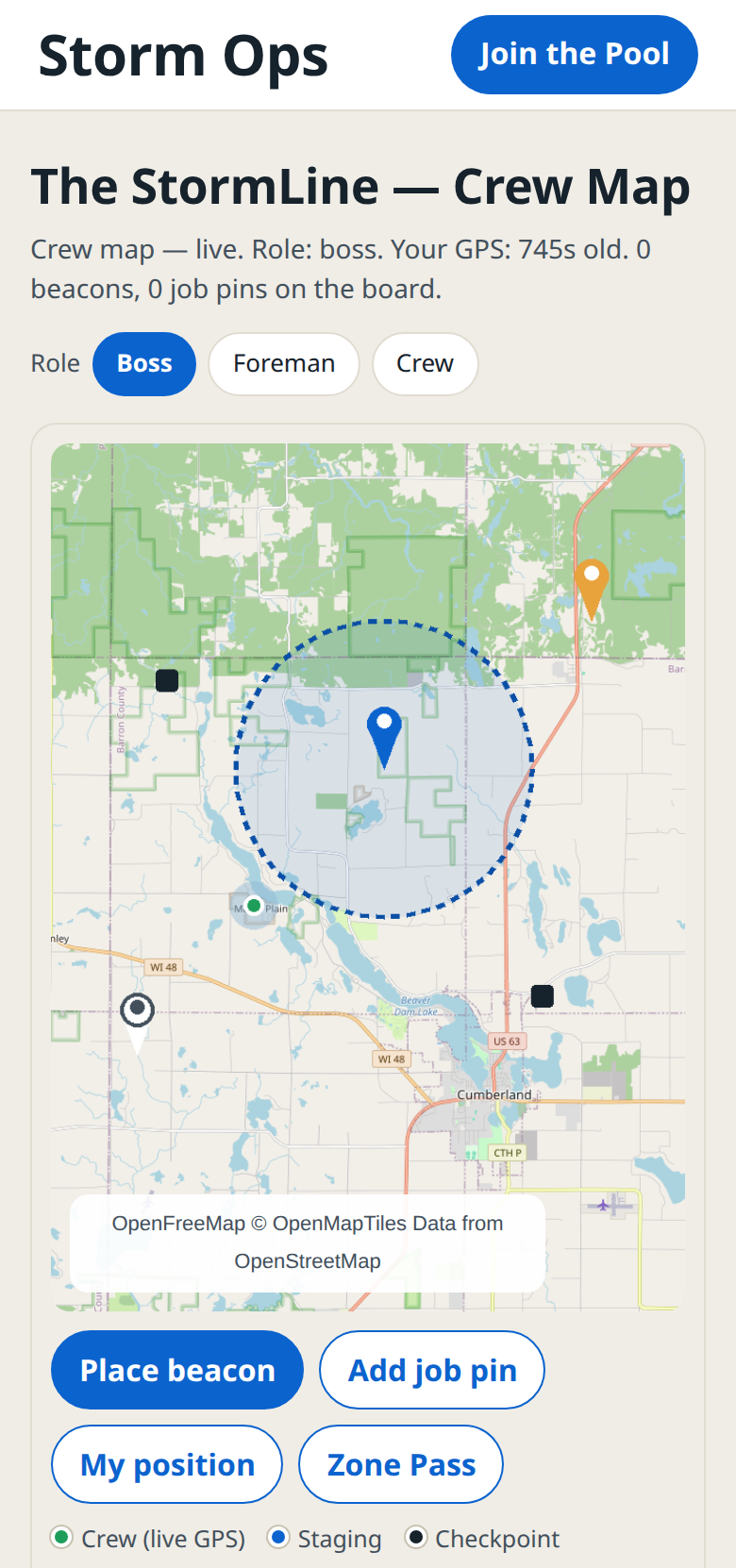
Jobs go up as pins. Crews show where they stand. Staging, checkpoints, and the dump are beacons the boss drops where the work is. If you can read a map, you can run this board — there is nothing to learn.
Job pins
A job becomes a pin. The pin carries the job from first call to closed, with the whole record inside it.
Beacons
Staging, checkpoint, dump. The boss or foreman puts them down in the field, in seconds, and they stay where the work put them.
Your men, live
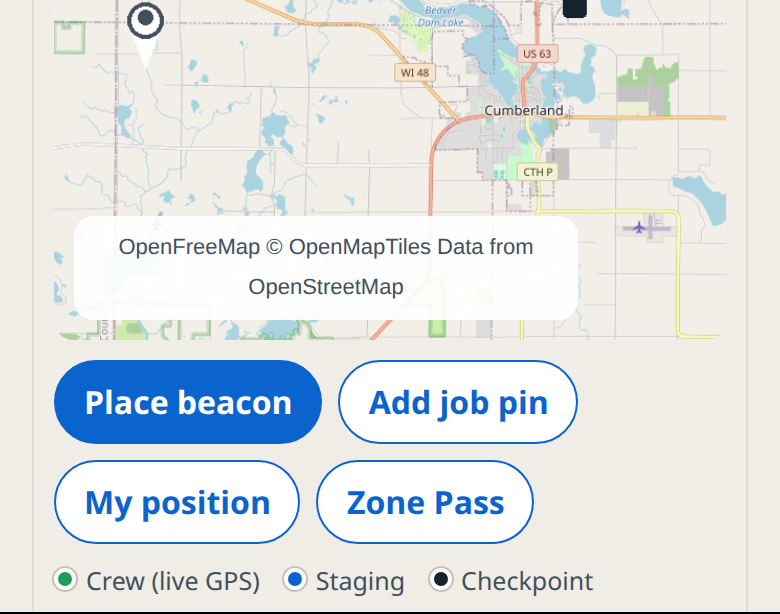
While a man is punched in, his crew sees him on the board. Punch out and he is off it. Nothing runs off the clock.
Punch in your way.
Four doors. The boss picks them once. A man with gloves on and a dead phone still gets punched in.
App
One tap on his own phone. The punch stamps the time and the place.
PIN
His number, typed on any phone at the site. No app, no email, no account hunt.
QR
Scan the code on the beacon at staging. The punch lands on that job, at that spot.
Kiosk
One tablet at staging, locked to the punch pad and the roster. The whole crew, one screen.
Every door works with no signal. Punches queue on the phone and send themselves when service comes back.
The fence is your call.
Want punches to land only at the site? Draw a circle around the job. Inside it, punches land. Outside it, they don't — unless the foreman lets a man in, with his reason written on the record.
Don't want it? Leave it off. No fence, no gate — punches land wherever your men stand. It is an option, not a law.
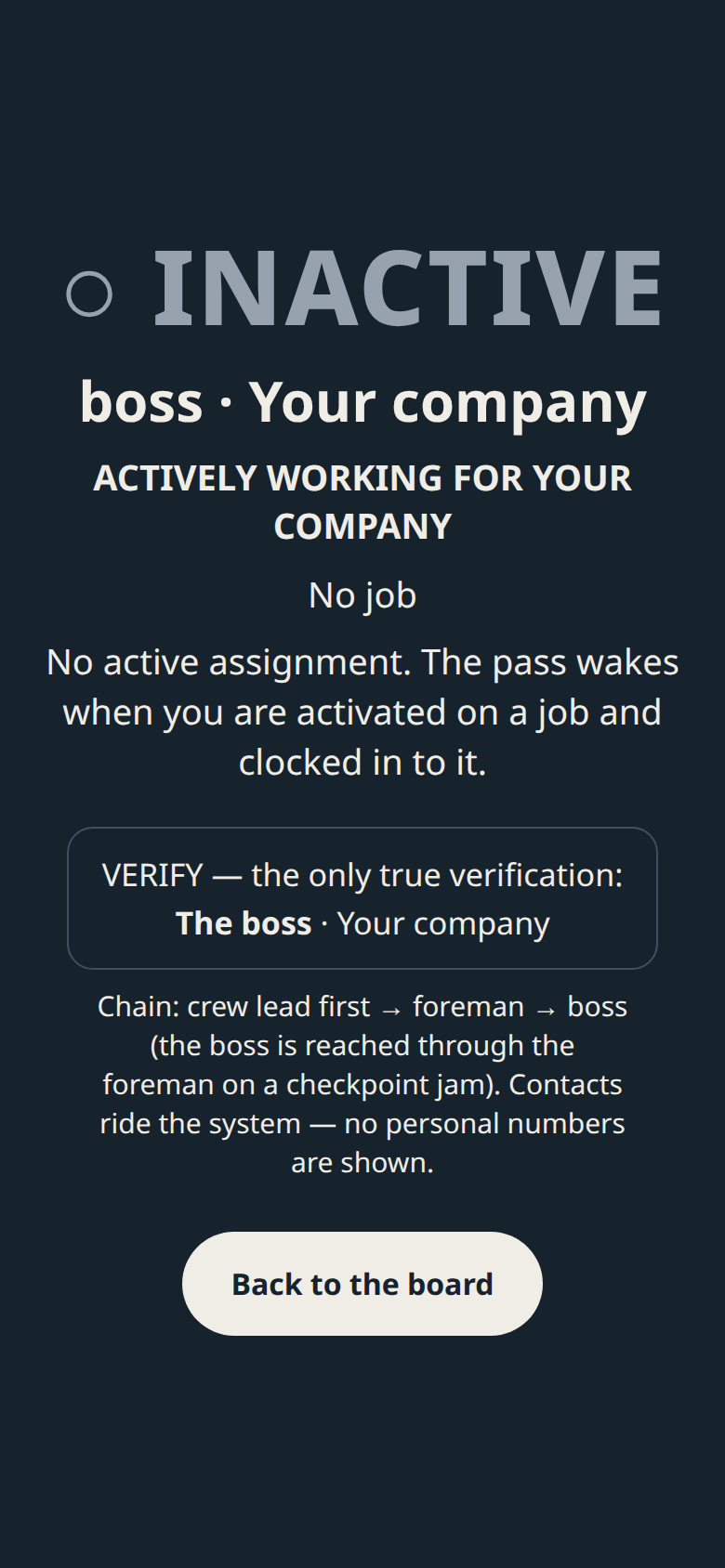
Zone Pass. On his phone, only while he works.
A full-screen pass that lives only while a man is on a confirmed job and punched in. Punch out, or the job closes, and the pass dies — with the reason printed on its face.
That is the whole check. No wallet of papers at the gate — the boss's number and the company name are what anyone verifies.
How the work moves.
Join the poolA prime asks for a trade — tree work, roofing, debris, water, rebuild.
He picks from that trade's pickup list. The front of the list hears about the job first.
First man to accept gets the job. Finished work is reviewed, and good work moves you up the list.
First in. Last out. Last man standing, first one paid.
The pool. Straight numbers.
No per-man math, no add-on stack. Three numbers, and you already know all of them.
Get in
At signup. It pays for your vetting — insurance, equipment, and permits, checked by a human — and it covers your first month.
Stay in
Or $1,000 flat for the year. Your choice. Your spot on your trade's pickup list, in your territory.
Front of the line
Optional. Priority standing, all in: you hear first, you see the whole field, primes see your mark. At five reviews it drops to the $100 slot on its own.
Bring a buddy and sign up is free.
You pay your $100, your buddy signs up and pays his, and your $100 comes back to you.
Have a sponsor or grandfather code? It waives the $100 at signup.
You put the crews to work?
Then this board was built for your side of it: your subs, your staging, your paperwork, one place, readable in two seconds at 2 a.m. Prime seats start with a pilot — set up in conversation, pilot first, everything unlocked. They are never sold off a page, and the price is a conversation, not a poster.
Your company is already on the board.
We have already carded the storm crews — your company name, your trade, your territory, your public phone, gathered from public listings. Your card is here. Claiming it takes a minute: confirm it is yours, pay the $100, and add the papers only you hold, so a human can vet you.
Today, not someday. Claim it today and the vetting starts today. Next time a prime company needs your kind of work in your area, your name is already on his list, vetted and ready — not filling out forms while the job goes to somebody else.